LyfeCommand Ads 15 · Speak instead of type
Don't Type It. Say It.
Campaign artwork and concept by MetaDreams Global, LLC/MetaDreams.io.
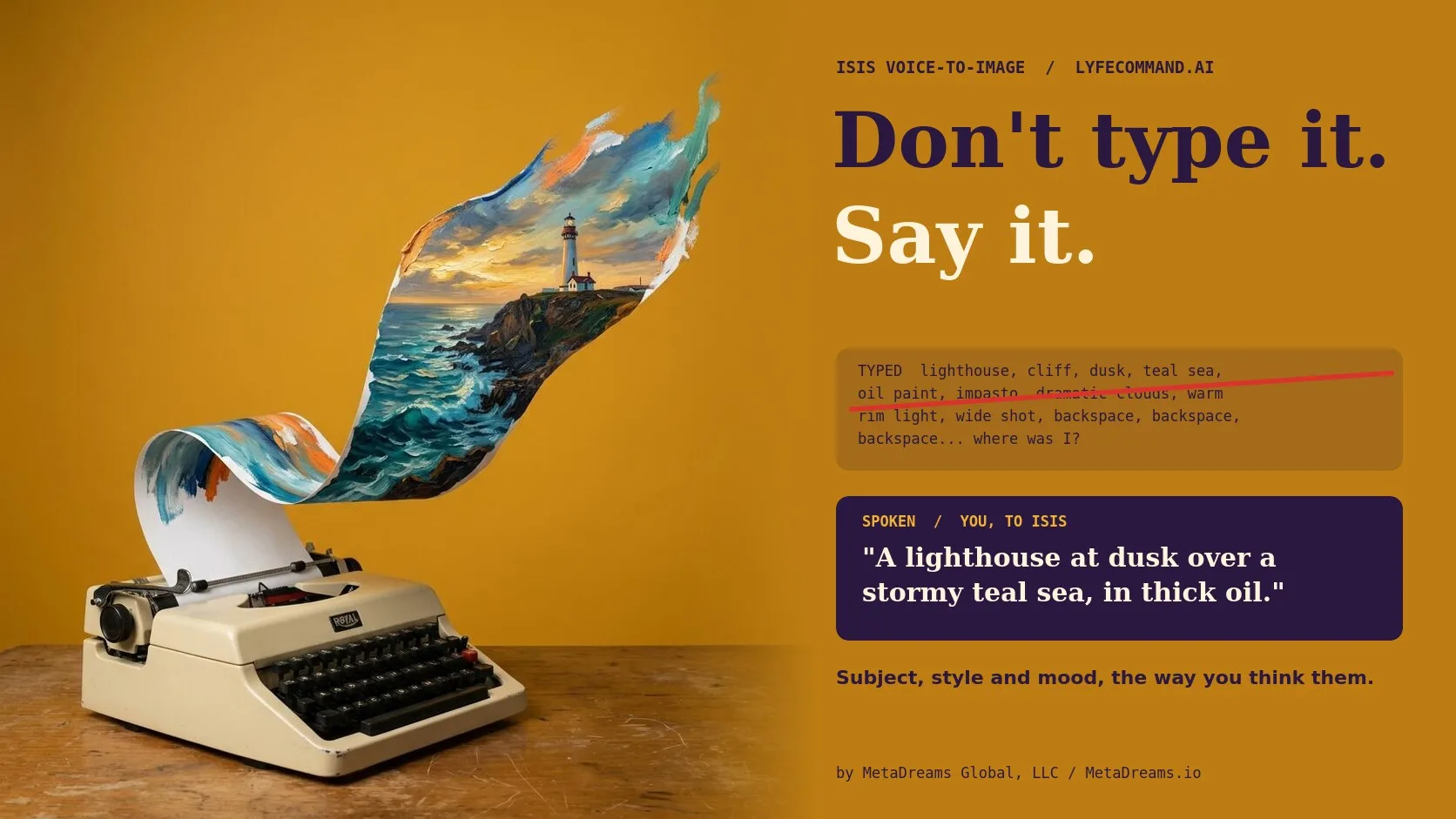
Image ideas rarely arrive as tidy lists of keywords. They arrive as a picture in your head and a feeling about it. This campaign sets a typewriter against a single spoken line to show the difference: one way makes you translate, the other lets you simply describe.
Speaking a description
- Capture an image idea without typing a lengthy prompt
- Describe subject, style and mood in ordinary sentences
- Add or change details by simply saying them
- Go hands-free when that suits where you are
Describe it the way you see it
Typed prompts often turn into lists: subject, comma, lighting, comma, style, comma. Speaking invites a more natural description. You can tell ISIS what is in the scene, how it should feel and what it should look like, in the same words you would use with a friend, then add a detail you forgot without hunting for the right spot in a text box.
Because the request is a conversation, you can follow up out loud: warmer light, fewer clouds, try it as a watercolor. ISIS treats the description as yours to shape.
Capture the thought before it fades
Ideas show up while you are cooking, walking or between calls. When it is appropriate to talk, saying the idea takes a few seconds and keeps your hands free. You do not have to stop, open a keyboard and compose a prompt before the picture in your head slips away.
Speaking is not always the best choice. When you need exact wording, such as a precise phrase, a name spelled a particular way or a long technical description, typing is still useful and may be easier to review. Use whichever fits the moment.
Keep expectations clear
Speaking a description is a different way to make a request; it does not guarantee better image quality or faster generation. Speech recognition can mishear words, and generated images can contain mistakes, including inaccurate text. Review results before sharing them.